

Ideas. Purpose. Transformation.
We help turn important ideas into action through justice-informed insight, lived experience, and practical strategy.
Organizations, universities, faith communities, and companies often want to serve justice-involved people without fully understanding how incarceration, release, supervision, poverty, distrust, technology barriers, and institutional systems shape their decisions. Robben helps close that gap.
We bring lived experience, practical knowledge, and strategic judgment to the table—so clients can design services, partnerships, communications, and products that are credible, useful, and grounded in how people actually live.
Understanding Comes Before Strategy
Understanding Comes Before Strategy
Good intentions are not enough.
Organizations need strategies shaped by how justice-involved people actually experience systems, services, and opportunity.
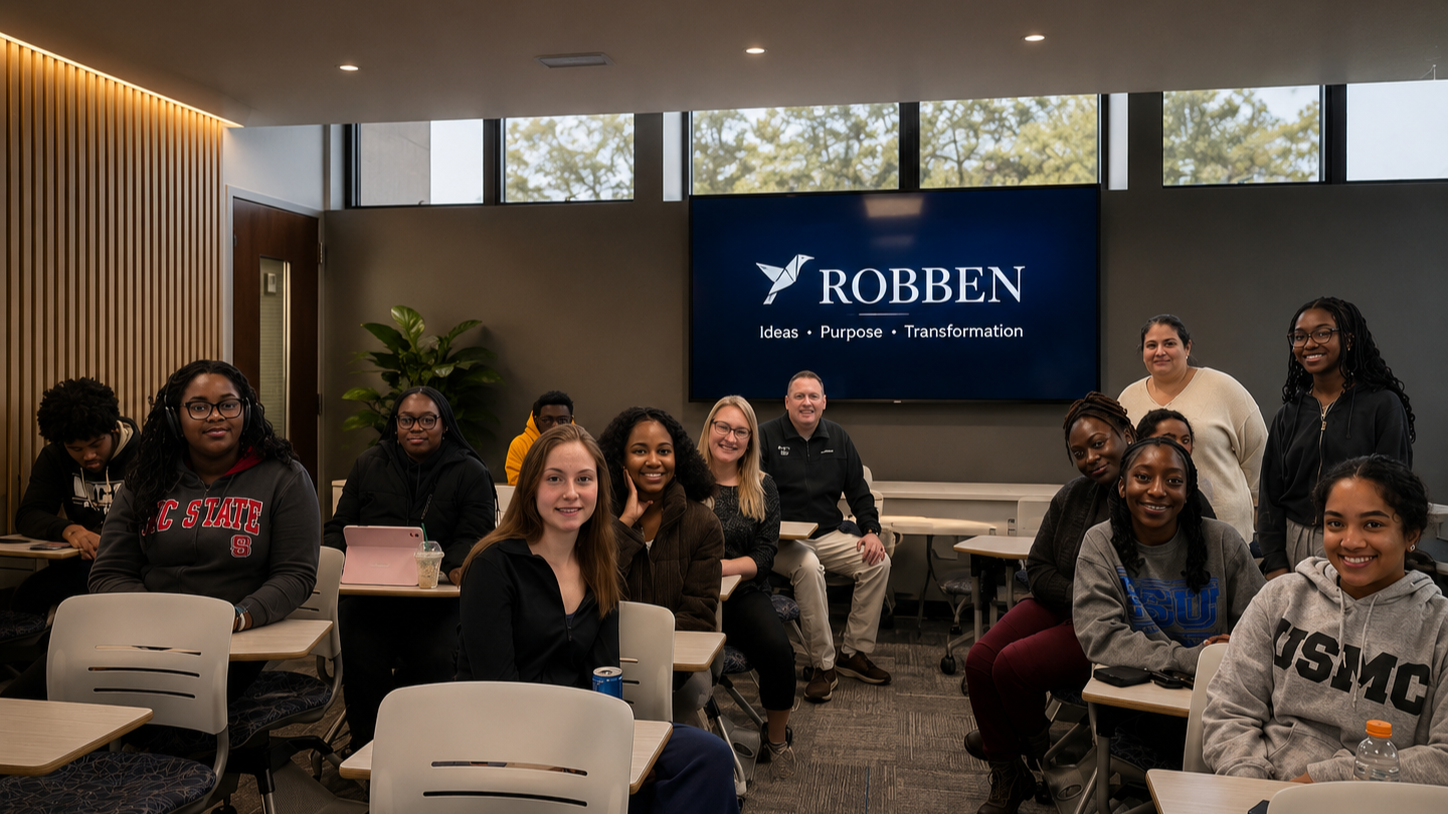
What Robben Brings
What Robben Brings
When formerly incarcerated people can access credible support, stable opportunities, and systems designed with their realities in mind, the benefits extend beyond the individual. Families become more stable, employers gain committed workers, communities retain talent, public resources are used more effectively, and fewer people are pushed back toward the conditions that contribute to reincarceration.
Robben helps make those outcomes more possible by helping organizations design services, products, communications, partnerships, and systems that are informed by lived experience and built for the realities of life after incarceration.
How robben helps

COMMUNICATE
Create language and content that are clear, credible, and grounded.
Understand how justice-involved people experience institutions, services, technology, supervision, and reentry.

INTERPRET
Facilitating Reentry Simulations, delivering public presentations on reentry, and helping teams understand post-release experiences.
How robben helps
EXAMPLES
CAPABILITY
Determine whether a service, product, message, or process will be credible, accessible, and useful.

EVALUATE
WHAT IT MEANS
PRACTICAL EXAMPLES
EXAMPLES
Reviewing programs, digital tools, outreach materials, application processes, and participant communications.
Shape practical services, programs, outreach strategies, user experiences, and implementation plans.

DESIGN
EXAMPLES
Developing pilots, participant pathways, support models, outreach strategies, and implementation plans.
EXAMPLES
Developing training, presentations, proposals, webinars, guides, curricula, and participant-facing content.
Build pathways between organizations, systems, communities, and the people they hope to reach.

CONNECT
EXAMPLES
Partnership development, stakeholder engagement, outreach planning, and introductions across justice systems, universities, companies, and community organizations.
our White papers
our White papers
Robben develops practical white papers to help employers, educators, service providers, faith communities, and other organizations better understand, engage, employ, and support justice-involved people. Each paper combines lived experience, professional insight, and research to examine a specific challenge and offer useful guidance.
We make these resources available free of charge because we believe useful knowledge should be accessible to the organizations and individuals working to improve outcomes for justice-involved people. The three most recent papers are featured below. Access the complete Robben White Paper Archive →
The papers may be shared and distributed in their complete, unmodified form with attribution to Robben. Excerpts, adaptations, alterations, or partial distribution require prior written permission.

-
This paper helps organizations understand why justice-involved clients may resist required services—and how listening, fairness, choice, credibility, and personal purpose can turn reluctant attendance into meaningful engagement.
-
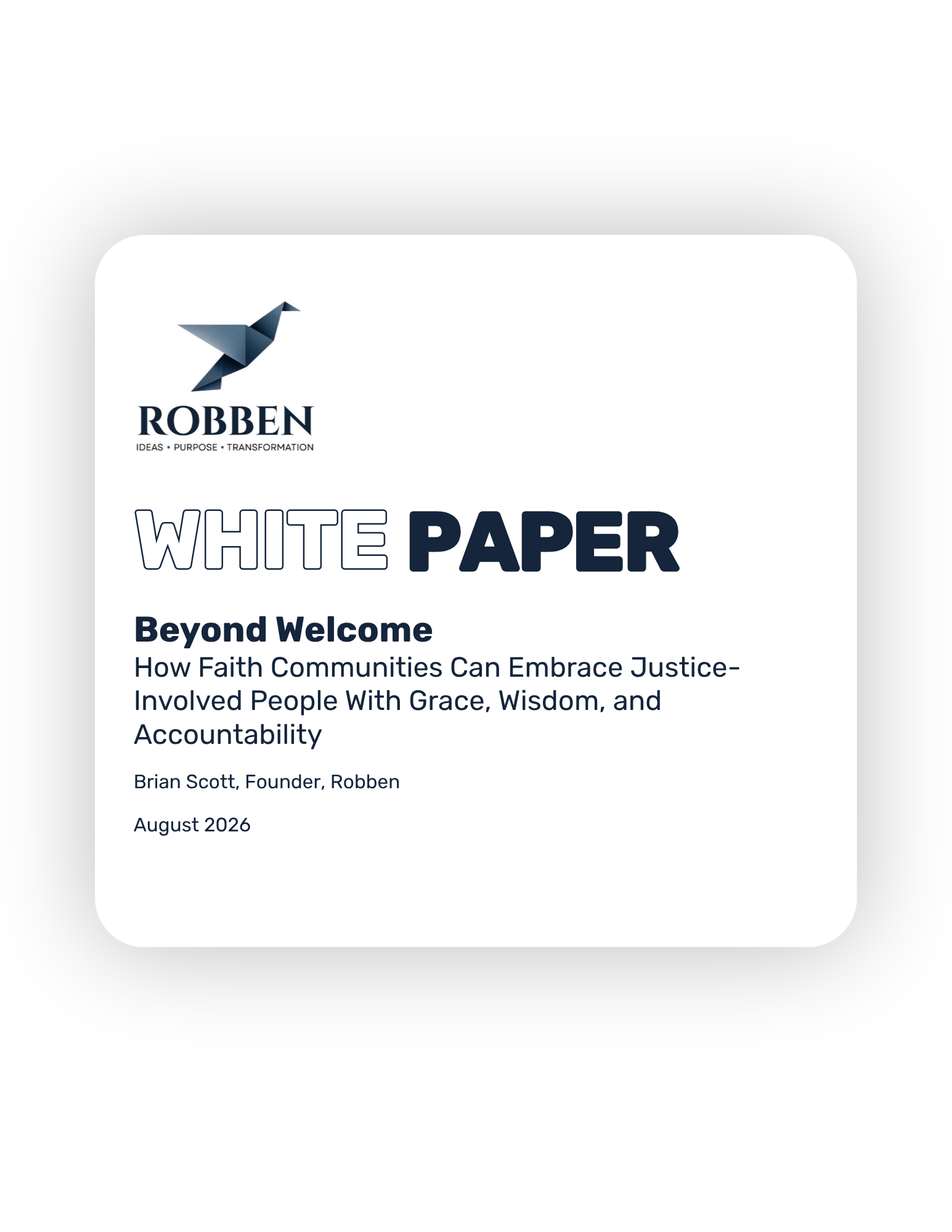
This paper helps faith communities welcome justice-involved people with grace, wisdom, accountability, and appropriate safeguards while creating meaningful opportunities for belonging, service, and healing.
-
This paper explores how educators can better teach justice-involved students by pairing high expectations with credible instruction, meaningful challenge, respectful feedback, and learning experiences that recognize curiosity, ability, and potential.

About Robben
About Robben

Brian Scott is the founder of Robben. After serving twenty years in North Carolina prisons, he returned home and built both a statewide reentry organization and a national network of people committed to helping formerly incarcerated individuals navigate life after release.
Today, through Robben, Brian helps organizations, universities, faith communities, and corporations design more credible and effective ways to serve justice-involved populations.

The story behind the name
Robben takes its name from Robben Island, off the coast of South Africa, where a prison once operated and generations of people were confined and separated from society. Today, the island carries a broader meaning: it shows how a place defined by oppression can become a symbol of reflection, resilience, and transformation.
That idea is central to Robben’s dedication to helping organizations move beyond limiting assumptions and design stronger services, opportunities, and partnerships for people building a life after incarceration.
“Brian has an exceptional ability to turn ideas into reality. He recognizes opportunities where others see obstacles and has a remarkable talent for bringing people and organizations together around a shared vision.”
Samantha Dillingham, CEO SMD Business Finance
Testimonials
The story behind the name
bring us Your idea
bring us your idea
If your organization, university, or company is developing a service, product, partnership, or strategy for justice-involved people, Robben can help shape an approach grounded in lived experience and the realities of life after incarceration.
Tell us what you are working on, who you hope to serve, and where the idea currently stands.